MySQL Table Naming Conventions for Better Readability
Stop using 'id1', 'id2'. Learn a consistent naming strategy for tables and columns that makes your SQL queries readable and maintainable.
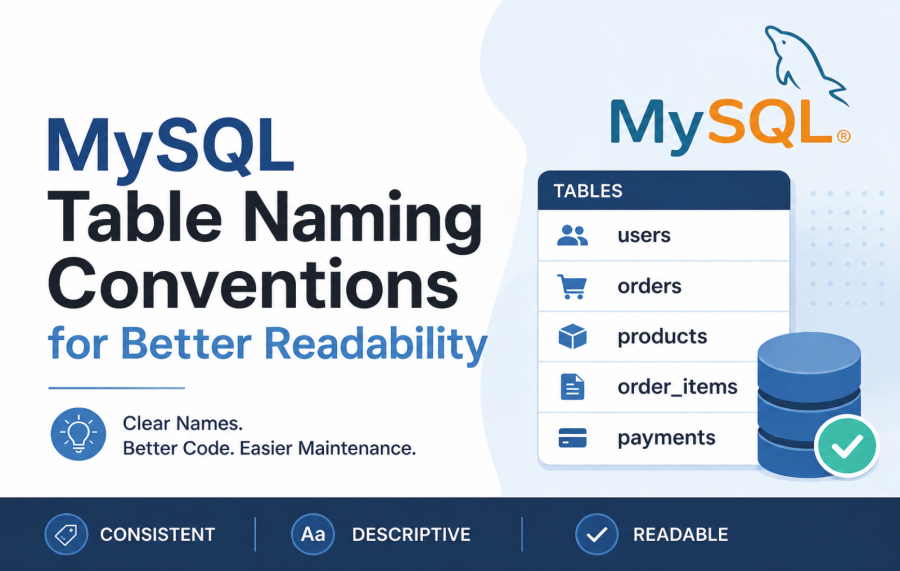
Database performance matters. Indexes matter. Query optimization matters. But one thing that silently hurts every MySQL project is poor naming conventions.
Why Table and Column Naming Matters More Than You Think
In real projects, databases live longer than code. Developers change. Teams change. Business logic changes.
But database tables and columns often stay for years. When names are unclear, every query becomes harder to read. Every bug takes longer to fix.
Good naming is not about style. It is about making your database easy to understand without asking the original developer.
Real-World Problems Caused by Poor Naming Conventions
Many developers have worked on databases where table names look like this:
datainfomasterdetails
At first, things work. Queries run. Features are shipped. But after some time, confusion starts.
Developers are not sure which table to use. Joins become risky. Bugs appear because someone misunderstood a column.
These problems do not show on day one. They show after six months or one year.
Poor naming is often part of a larger problem involving common schema design mistakes developers make in MySQL , which can make databases difficult to maintain over time.
Common Table Naming Mistakes Seen in MySQL Projects
Using Generic Table Names
Tables named data, records, or info tell nothing. A table name should explain what type of data it stores.
Mixing Singular and Plural Randomly
One table is named users, another is order, and another is products_list. This inconsistency confuses everyone.
Short or Cryptic Names
Names like usr_dt or ord_m save typing but waste hours of reading time.
Column Naming Mistakes That Break Query Readability
Column naming problems are even more common than table naming issues.
Vague Column Names
Columns like status, type, or value are unclear without context. What kind of status? Active? Deleted? Approved?
Boolean Columns Without Meaning
Columns named flag or is_ok force developers to check code or data to understand them.
Different Names for the Same Meaning
One table uses user_id, another uses uid, another uses customer_id for the same thing. This increases mistakes during joins.
The Hidden Cost of Inconsistent Naming Across Tables
Inconsistent naming does not break SQL queries. But it breaks human understanding.
Inconsistent table structures often lead to common indexing mistakes that slow down MySQL queries , especially in large production databases.
When developers write joins, they rely on naming patterns. If patterns are missing, every join needs extra checking.
This leads to:
- More bugs
- Longer code reviews
- Fear of changing existing queries
How Poor Naming Slows Down Teams and Onboarding
New developers often struggle not because the system is complex, but because the database names do not explain anything.
They keep asking:
- Which table should I use?
- What does this column mean?
- Is this table still active?
Clear naming works like documentation. Bad naming creates dependency on people instead of structure.
Principles of Good MySQL Naming Conventions
Good naming follows simple rules:
- Names should explain purpose
- Consistency is more important than preference
- Names should be readable inside SQL queries
If a table or column needs explanation, its name is probably wrong.
Best Practices for Naming MySQL Tables
Use Clear Business Meaning
Table names should reflect business concepts. For example, orders is better than order_data.
Stick to One Style
Choose plural or singular and use it everywhere. Most teams prefer plural table names like users, products.
Avoid Temporary or Technical Words
Words like temp, backup, or final should not be in permanent tables.
Best Practices for Naming MySQL Columns
Be Specific
Use names like order_status instead of status.
Foreign Keys Should Be Predictable
Always use the referenced table name:
user_id
order_id
product_id
Boolean Columns Should Read Like Questions
Examples:
is_activeis_deletedhas_access
While naming columns clearly is important, developers must also focus on choosing the correct MySQL data types for columns to maintain performance and consistency.
Naming Conventions for Relationships and IDs
IDs should always be easy to guess. When someone sees user_id, they should know exactly where it comes from.
This makes joins simple and reduces mistakes.
Handling Legacy Databases With Bad Naming
Not every project allows renaming tables. Sometimes the database is already live and critical.
In such cases:
- Improve naming in new tables
- Use database views with better names
- Document unclear columns
Small improvements still help a lot.
When working with legacy systems, it is useful to start by performing regular schema health checks in MySQL to identify structural issues like inconsistent naming.
A Simple Naming Checklist for MySQL Projects
- Does the name explain its purpose?
- Is it consistent with other tables?
- Can a new developer understand it?
- Does it read well inside SQL queries?
Final Thoughts
Good naming is not about perfection. It is about clarity.
Clean names reduce bugs, improve readability, and make databases easier to trust.
If your database names are clear, your system becomes easier to maintain for everyone.

Ketan Patel
PHP & MySQL Performance Optimization Specialist
I specialize in diagnosing and fixing slow PHP applications, optimizing MySQL queries, and resolving backend bottlenecks in live production systems. My approach is metric-driven — identifying root causes through profiling, execution analysis, and structured optimization instead of guesswork.